

The Ultimate Guide to Low-Stress Grooming: How Holistic Care Transforms Reactive Dogs at The Turquoise Pooch Paw Spa
Introduction
Among the most misinterpreted pets we have in our lives are reactive dogs. Their responses—such as barking, lunging, shaking, or abrupt avoidance—are nearly always frantic pleas for assistance from a nervous system that has been overtaxed. Reactive dogs are simply overwhelmed by a world that moves too quickly, touches too quickly or sounds too loud. They are not bad.
Every choice we make at The Turquoise Pooch Paw Spa is based on this fundamental principle. Grooming in our opinion is an essential chance to safeguard and improve a dog's emotional health rather than just being aesthetically pleasing. Your sensitive or reactive dog will receive individualized consent-based care intended to foster trust, safety, and long-term confidence whether you choose the quiet seclusion of our mobile unit or a committed one-on-one session at either our Berryville or Harrison locations.
Beyond the Clippers: The Sensory World of the Reactive Dog
The first step in properly grooming a reactive dog is to comprehend their enhanced sensory experience. Dogs have an amazing sense of their surroundings and they frequently perceive the world much more intensely than people. They are extremely sensitive to changes in their surroundings because of this acuity, which includes a far superior sense of smell and hearing.
Veterinary behavior research consistently highlights that environmental triggers—such as sudden noise, unfamiliar places, and unpredictable handling—can instantly raise stress levels and trigger a fear response in dogs. A dog experiencing fear, anxiety, or stress (FAS) is barking or attempting to flee. Learning and cooperation are impossible in this state because the body is overloaded with cortisol and adrenaline.
For a reactive dog, a conventional busy grooming salon is frequently the worst option:
Loud Dryer Noise: May sound like a persistent danger.
Strong Chemical Smells: They overwhelm and perplex their sense of smell.
The Sight of Other Anxious Dogs: Their own panic is reinforced when they see other anxious dogs.
Rushed Employees: Prevents the time needed to establish trust.
Our goal is to surgically eliminate these stressors in order to create a sensory environment that is actively calming rather than just bearable. We change the dog's nervous system from one of survival to one of calm engagement by lowering stimulation and using a slow, gentle pace.
Low-Stress Handling and Consent are the Cornerstones of Trust
The most reputable organizations in veterinary medicine and animal welfare acknowledge that a dog's emotional and physical well-being are inextricably linked. The American Veterinary Medical Association (AVMA) firmly supports Low-Stress Handling Guidelines, which form the cornerstone of our practice. During all handling procedures, these guidelines support the identification and proactive reduction of fear, anxiety, and stress (FAS).
The Standard That Cannot Be Compromised is Consent-Based Grooming
Giving the dog a voice is the most effective tool we have. Our method is essentially consent-based. This means that we search for calming signals (lip-licking, head turning, yawning, shaking off) which are subtle indicators of comfort or discomfort. We never make a procedure happen. When a dog retreats, we immediately halt, pause, and reconsider our strategy.
There are three advantages to this method:
Reduces the Fear-Aggression Cycle: We can prevent a dog's fear from turning into a protective or aggressive reaction by never forcing a procedure.
Develops Predictability: The dog picks up on the fact that they stop if I say no. The dog's brain is able to break out of the panic state because of this predictability, which is the cornerstone of trust.
Promotes Cooperation: Dogs are naturally more cooperative and eager to participate in the process when they feel secure and in control.
Training Based on Science: Counterconditioning and Desensitization
The American College of Veterinary Behaviorists (ACVB) supports the use of step-by-step introductions based on the principles of desensitization and counterconditioning, which are the gold standard for reducing fear-based reactions.

This is a meticulous process that includes:
Micro Exposures: Introducing grooming tools (such as clippers, brushes, and nail grinders) at the lowest possible intensity, frequently beginning with just the tool's appearance or aroma.
Pairing with Positive Reinforcement (Counterconditioning): Every single exposure, no matter how brief, is immediately followed by a high-value, highly-preferred reward (a lick of peanut butter, a special treat, or a favorite toy).
Respecting the Distance Threshold: We operate below the stress threshold of the dog. We keep a distance so the dog can see the tool or feel it without exhibiting obvious symptoms of FAS. We progressively reduce that distance over the course of minutes, sessions, or even weeks as long as the dog stays calm.
This procedure makes sure the dog actively develops a positive new emotional association with the grooming tool rather than merely tolerating it.
The Holistic Toolkit: Reiki, Sound, and Environmental Control
We go beyond simple handling to incorporate potent holistic and environmental tools that support nervous system regulation in order to completely address the emotional needs of a sensitive dog.
1. The Environmental Control Power: One-on-One and Mobile
For the reactive dog, our emphasis on one-on-one consultations and mobile grooming is essential. According to veterinary research, dogs frequently feel stressed out when they are in strange places and hear everyday household noises.
Mobile Grooming: We remove the main source of stress—traveling by car and waiting in a noisy, strange lobby—by grooming the dog right outside their house. The comforting scents of their neighborhood and yard serve as instant anchors.
One-on-One Private Sessions: This removes the stimulus that frequently causes barrier frustration or protective reactivity by removing other dogs' visual and auditory presence. Because the dog is totally focused on the groomer, trust can grow without outside distractions.
2. The Gentle Hand of Energy is Known as Reiki
Reiki is a gentle, non-invasive energy technique that helps promote deep relaxation and emotional grounding. The American Kennel Club (AKC) acknowledges that Reiki can be a useful supplemental therapy for helping anxious or high-strung dogs feel less stressed and more at ease.
We use light, deliberate energy work during a session, usually just gently resting a hand on the dog's shoulder or back when they pause. This slight touch is beneficial:
Promote a change from fight or flight to rest and digest in order to calm the sympathetic nervous system.
Reduce Tension in the Muscles: Reiki helps release the tension that anxiety causes in the body.
Foster Connection: The dog and the groomer's relationship of trust is strengthened by the groomer's deliberate, quiet presence.
3. Using Tuning Forks to Harness Soft Frequencies is Known as Sound Therapy
One powerful tool for reducing stress is sound. Dogs under stress can benefit from the calming effects of music and quiet auditory environments, according to research published in the Journal of Veterinary Behavior.
We take advantage of this science by putting in place multiple layers of sound support:
Therapeutic Music: We employ specially written music with particular tempos and frequencies that have been shown to soothe canine nervous systems.
Quiet Harmonic Tones: We make sure that the entire space is acoustically controlled, minimizing the volume of tools and softening voices.
Tuning Forks: An In-Depth Look at Delicate Control
Among our most comprehensive and specialized tools are tuning forks. Tuning forks produce a pure, quiet, and steady vibrational frequency, in contrast to loud musical instruments. The fork produces a soft hum when it is turned on, which produces resonance.
How It Operates: The dog's body is very sensitive to steady vibration, especially their nervous system. Using the sound wave itself, we gently approach the dog with tuning forks—never touching it unless the dog initiates. This steady, predictable tone can act as an anchor, helping the dog to:
Control Breathing: A dog's shallow nervous breathing can be paced and deepened by the steady frequency.
Interrupt Anxiety: The new calming frequency provides a brief reset by breaking the dog's nervous feedback loop.
Settle Faster: As their bodies react to the steady, non-threatening vibration, some dogs exhibit noticeable relaxation in a matter of seconds.
Only dogs who react favorably or neutrally to the sound are allowed to use tuning forks as a supplemental, consent-based tool.
The Comfort Plan: Customizing the Travel
Each dog that reacts is different. The sound of the nail grinder may frighten one dog, while the first touch of the bathwater may frighten another. While a nervous Terrier may require continual human reassurance, a sensitive Shepherd may require space. For the reactive dog, a one-size-fits-all strategy ensures failure.
We create a Custom Comfort Plan for each client because of this:

Extended Time: Desensitization work, frequent breaks, and just waiting for the dog to be ready are all accommodated by the generous scheduling of appointments. Trust is undermined by hurrying.
Staggered Sessions: We might advise several brief visits for dogs with severe sensory overload (e.g., one bath session, one nail appointment) as opposed to one intimidating, long appointment.
Priority on Triggers: Before attempting the task, we determine the dog's biggest fear (the dryer, the clippers, the water) and we prioritize positive reinforcement and desensitization work around that trigger.
Teamwork and Communication: We offer families advice for at-home reinforcement, which consists of modest, constructive activities that enhance the self-assurance acquired in the spa. Your assistance is essential to keeping the dog moving forward.
Conclusion: A New Course for the Future
Reactive dogs are sensitive and often misunderstood. Their reactivity usually comes from fear rather than defiance, and it takes patience and understanding to help them feel safe. At The Turquoise Pooch Paw Spa, we provide an environment where even the most anxious dogs can start to associate grooming with calm, comfort, and positive attention. We combine gentle, research-based methods like Low Stress Handling and desensitization with holistic tools such as Reiki and sound therapy to give dogs a chance to relax and build confidence.

Every dog deserves a grooming experience that supports their emotional wellbeing. For pets that struggle with anxiety, overstimulation, or fear, we offer a quieter and more supportive approach that respects their limits.
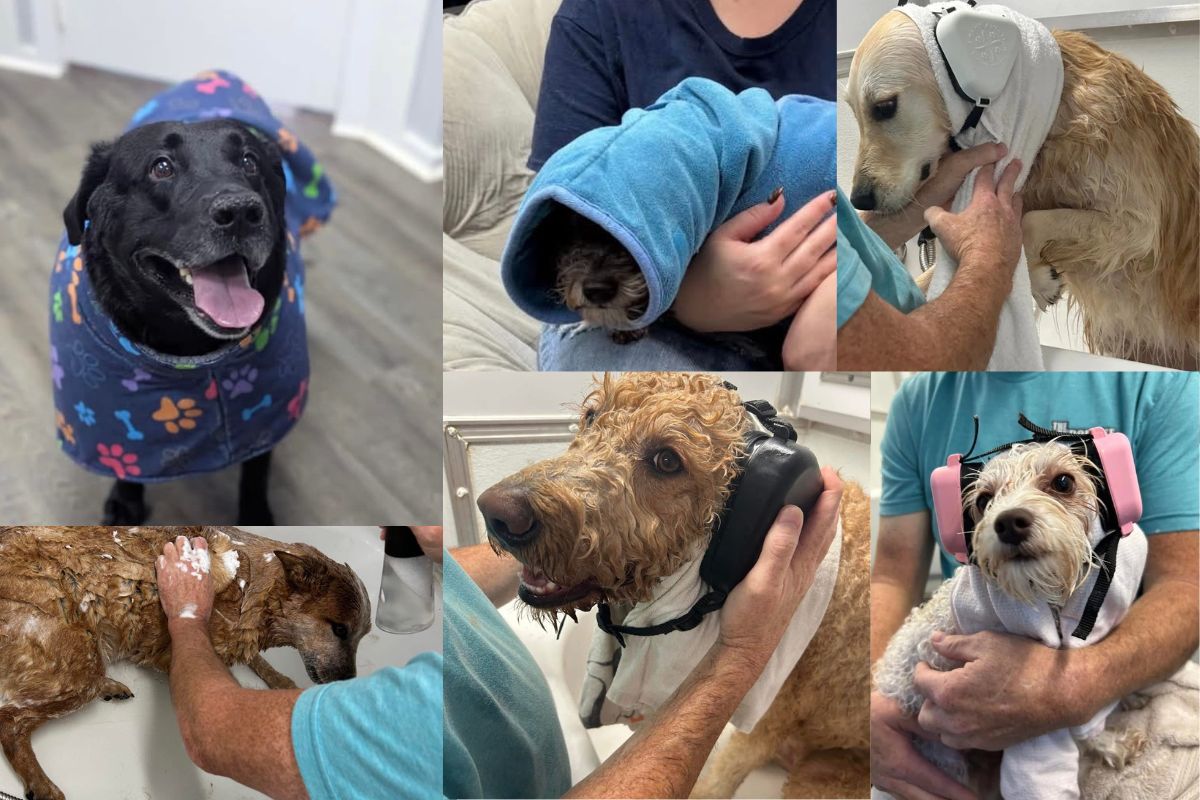
Each visit is carefully tailored to the dog in front of us. We use soft spa robes, aviation-grade ear protection, and restraint-free bathing stations to reduce stress. We recently worked with a terrier mix who panicked at the sound of the dryer. After putting her in a robe and adding ear protection, she was able to calm down and finish her grooming session without shaking.
Dogs are also allowed to lie down in the tub if that helps them feel safe. Many anxious or older pets settle more quickly when they are not forced into an upright position. We do not use standard grooming nooses because they do not fit with our approach to restraint-free, fear-free care. Our goal is a spa environment where dogs can breathe, feel understood, and build trust at their own pace.
Families in Northwest Arkansas can begin their dog’s path to stress-free grooming by texting (870) 577-2251 to schedule a personalized Comfort Consultation.
Source Citations
The Ohio State University:
“Basic Concepts | Indoor Pet Initiative.” Indoorpet.osu.edu, indoorpet.osu.edu/veterinarians/implementinglowstress/low_stress_handling_basic_concepts.
VCA Animal Hospitals:
Horwitz, Debra, and Gary Landsberg. “Introduction to Desensitization and Counterconditioning.” Vca_corporate, 2009, vcahospitals.com/know-your-pet/introduction-to-desensitization-and-counterconditioning
American Kennel Club:
Oct 14, Caitlin Ultimo, et al. “Reiki Healing for Pets: Is It Possible?” American Kennel Club, www.akc.org/expert-advice/health/reiki-healing-for-pets-is-it-possible/.
Journal of Veterinary Behavior:
King, Tammie, et al. “Effect of Music on Stress Parameters in Dogs during a Mock Veterinary Visit.” Animals, vol. 12, no. 2, 13 Jan. 2022, p. 187, https://doi.org/10.3390/ani12020187
Environmental Stress and Anxiety (Mobile Grooming and Auditory Triggers):
Grigg, Emma K., et al. “Stress-Related Behaviors in Companion Dogs Exposed to Common Household Noises, and Owners’ Interpretations of Their Dogs’ Behaviors.” Frontiers in Veterinary Science, vol. 8, 8 Nov. 2021, www.frontiersin.org/journals/veterinary-science/articles/10.3389/fvets.2021.760845/full, https://doi.org/10.3389/fvets.2021.760845
American Veterinary Medical Association:
American Veterinary Medical Association. “Principles of Veterinary Medical Ethics of the AVMA.” American Veterinary Medical Association, 2019, www.avma.org/resources-tools/avma-policies/principles-veterinary-medical-ethics-avma.